--Director of Photographer--
A cinematographer or director of photography (DOP) has many responsibilities in order to fulfil their role effectively. One responsibility they have which is in fact their sole role is their control over the camera(s) on set, this does not mean that they have to be behind the camera all the time. They also must frequently coordinate with the director and production designer, in order to execute what they are trying to achieve within each scene and shot. The amount of experience they need partly depends on their education history. Although there isn't any set path required to becoming a DOP , many people take the route of getting a university degree in cinematography or photography. However, even though this is it is recommended that the earlier you get hands-on experience the easier it will be for you to move up through the ranks.
 |
| Roger Deakins - Film |
An example of a DOP in the film industry is Roger Deakins who is a successful cinematographer best known for his work with the Coen brothers on a large number of their films- most of which have been given the best and highest achievement awards in film. Roger himself has been awarded 'American Society of Cinematographers Award for Outstanding Achievement in Cinematography in Theatrical Releases'. This is not surprising at all seeing as his role in the film 'Sicario' which is a 2015 release, shows his skills and experience using the camera to achieve excellent shots and angles.
I have researched into his achievements and found the following clip
--Audio Technician--
An audio technician is someone who works within the studio and their job involves them working on the mechanics of recording, mixing and reproducing sound. They do however differ from a sound producer. Their responsibilities include assembling, operating and maintaining the technical equipment used to record, enhance, mix or reproduce sound. They are also required to identify the sound requirements for a given task or situation and produce sound or audio recordings appropriately.
This is split between the production and post production stages.
--Audio Technician--
An audio technician is someone who works within the studio and their job involves them working on the mechanics of recording, mixing and reproducing sound. They do however differ from a sound producer. Their responsibilities include assembling, operating and maintaining the technical equipment used to record, enhance, mix or reproduce sound. They are also required to identify the sound requirements for a given task or situation and produce sound or audio recordings appropriately.
This is split between the production and post production stages.
--Costume Designer--
--TV News Editor--
News editors are often very skilled individuals as it takes years of experience to get to their position. An example of a TV news editor is Geof Hill who works for Channel 5 news. Hill has over 20 years of journalism and TV news experience, most recently as Editor of Channel 5 News – a role he took in late 2011 ahead of the service returning to ITN. During that time, he has recruited and developed a talented team, relaunched the new service, and overseen award-nominated home and foreign coverage, a studio build and a new programme launch with the critically-praised NewsTalk Live. He has also collaborated with ITN creative hub ITN Productions to supplement news coverage of key stories with fast-turnaround documentaries and specials for the channel.
--Film Editor--
An after effects editor works mainly in post-production. They are the right hand of the main editor and often have a harder more rigorous job to carry out. Regardless of whether they are working on a TV show production or a film, the after effects editor is responsible mainly for effects that are added on as an extra layer to the film or TV programme. This could stretch from something as small as the grading in each shot to CGI or even special effects.
Management
--Production Management--
Location managers being members of the film crew, are also very common in the film and especially the television industry. Their work involves finding and securing locations to be used, obtaining all fire, police and other governmental permits, and coordinating the logistics for the production to complete its work. Although this may seem quite simply, it can be very hard in reality. Simon Hassard is an example of a successful production manager, and has worked for many years in this role. One of his most recent productions includes the 'Heart Bingo TV Advert' which is a gambling company, the example is shown on the right. He has also been a location manager for the trailer of the ITV show 'Im a Celebrity, Get Me Out Of Here!'. This was for the 2015 series, and although when watching it an audience will not necessarily focus on the locations, it is clear from looking at it now that locations in any production are very important. They can be the reason why a production stands out and is successful or is unsuccessful.
--Field Manager--
Another well-established creative job role is Costume designer, when people watch movies and see the nicest costume in their favourite movie, they would want to know who designed it. Costume Designers start working on costumes for TV and films at the beginning of pre-production. They are in charge of designing, creating, acquiring and hiring all costumes for Actors and extras. This must be achieved within strict budgets, and to tight schedules. “Costume Designers' work is integral to defining the overall look of films, and their role requires a great deal of expertise. Their creative work ranges from designing original costumes, to overseeing the purchase and adaptation of ready-made outfits.”- (creative skillset) During pre-production Costume Designers break down scripts scene by scene, in order to work out how many characters are involved, and what costumes are required. “They then begin the more complex task of developing costume plots for each character.
These plots ensure that colors and styles do not mimic each other in the same scene, and highlight the characters' emotional journeys by varying the intensity and depth of colors.”- (creative skillset). A good costume designer should have creativity, imagination and excellent design skills and also good communication and organization skills, good research skills and knowledge of costume history and modern fashion, good stamina and the ability to work under pressure to strict deadlines. An example of a very famous costume designer is Edith Head. “Throughout her long career, she was nominated for 35 Academy Awards, including every year from 1948 through 1966, and won eight times – more Oscars than any other woman.”- (Google)
Editorial  |
| Geof Hill |
--TV News Editor--
News editors are often very skilled individuals as it takes years of experience to get to their position. An example of a TV news editor is Geof Hill who works for Channel 5 news. Hill has over 20 years of journalism and TV news experience, most recently as Editor of Channel 5 News – a role he took in late 2011 ahead of the service returning to ITN. During that time, he has recruited and developed a talented team, relaunched the new service, and overseen award-nominated home and foreign coverage, a studio build and a new programme launch with the critically-praised NewsTalk Live. He has also collaborated with ITN creative hub ITN Productions to supplement news coverage of key stories with fast-turnaround documentaries and specials for the channel.
He rejoined ITN from CNN International, where he was Director of Coverage in a role that saw him lead content for the network across Europe, the Middle East and Africa. During this time, he oversaw CNN's coverage of the Amanda Knox trial in Perugia, as well as the Royal Wedding, UK elections and South African World Cup.
--Film Editor--
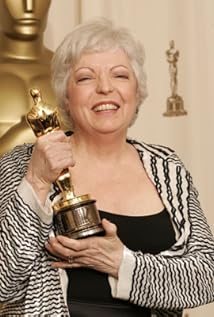
Editors perform one of the most important but least glamorous jobs in Hollywood. It's not uncommon for a director to shoot hundreds of hours of footage that needs to be whittled down to a tight, 90-minute film. A skilled editor will select the scenes and individual shots that best tell the story according to the director's specific vision. The way a story unfolds and grabs the attention of the audience is one of the most important elements in filmmaking. To ensure that the story flows effortlessly from beginning to end, each shot is carefully chosen and edited into a series of scenes, which are in turn assembled to create the finished film.
 |
| Thelma Shoonmaker |
Editors must have a degree of technical aptitude and wide experience of the post production process. “Since most films are now edited on computers, they must also be able to use a variety of computer editing equipment. They should understand dramatic storytelling and be able to create rhythm, pace and tension.”- (creative skillset). An example of a famous editor in the film industry is Thelma Schoonmaker American film editor who has worked with director Martin Scorsese for over forty years. She has edited all of Scorsese's films since Raging Bull. Schoonmaker has received seven Academy Award nominations for best editing, and has won three times (for Raging Bull, The Aviator, and The Departed). Although film editors have a tough role and their responsibility in producing a product worthy of winning awards is hanging over their shoulders, it is the after effects editor who is probably going through the tougher road to get a successful final edit. I will move on to looking at the role of an after effects editor next.
--After Effects Editor--An after effects editor works mainly in post-production. They are the right hand of the main editor and often have a harder more rigorous job to carry out. Regardless of whether they are working on a TV show production or a film, the after effects editor is responsible mainly for effects that are added on as an extra layer to the film or TV programme. This could stretch from something as small as the grading in each shot to CGI or even special effects.
Management
--Production Management--
 |
| Susie Field |
A production managers job involves them managing the production from the beginning till the end. Their work can sometimes overlap with a producers job, as it entails some similarities. Nevertheless, the work of a production manager is also very essential and includes organizing the production, the finance and employment issues within the production. Also, they are in charge of the budget of the production, and how it is spent, making sure everything runs as smoothly as can be. An example of a production manager is Susie Field, whose work is in the television field. Working as a production manager for many years and building her experience. She has worked for; Steel Bank Films, Various, Stone City Films, Carlton Television and many more.
--Location(s) Manager-- |
| Simon Hassard |
Location managers being members of the film crew, are also very common in the film and especially the television industry. Their work involves finding and securing locations to be used, obtaining all fire, police and other governmental permits, and coordinating the logistics for the production to complete its work. Although this may seem quite simply, it can be very hard in reality. Simon Hassard is an example of a successful production manager, and has worked for many years in this role. One of his most recent productions includes the 'Heart Bingo TV Advert' which is a gambling company, the example is shown on the right. He has also been a location manager for the trailer of the ITV show 'Im a Celebrity, Get Me Out Of Here!'. This was for the 2015 series, and although when watching it an audience will not necessarily focus on the locations, it is clear from looking at it now that locations in any production are very important. They can be the reason why a production stands out and is successful or is unsuccessful.
It is often common to mistake a location manager with a field manager, as they are both concerned with the area in which the production is filmed. Their work is very similar, however what distinguishes a field manager with a location manager is that the location manager often has more power in deciding the locations of a production, leaving the field manager the job of overseeing all operations taking place in the field. Generally, a field manager's responsibilities include training, performance monitoring, planning, analyzing, and more general administrative duties to ensure that employees are working effectively and efficiently.
Creative
--Scriptwriter--
 |
| Danny Stack |
Screenwriter for short, scriptwriter or scenarist is a writer who practices the craft of screenwriting, writing screenplays on which mass media such as films, television programs, comics or video games are based. They are needed in any production, unless the production does not have any dialogue. An example I have found is Danny Stack, whose work has accumulated throughout the years. His work includes ; an episode of the new Thunderbirds for CiTV (2015 tx). TV drama (EastEnders etc); Who Killed Nelson Nutmeg?, and many more.
--Director--
--Director--
One of the most popular types of creative job role would be a Director. “A director is the driving artistic force behind the production. They direct both the crew and cast as to how they want a section to look or scene to be played. Directors oversee the artistic vision of a film. “Directors aren't usually involved in the financial side of filmmaking, unless they're wearing multiple hats as a producer-director.”- (howstuffworks). Directors' main duties include casting, script editing, shot composition, shot selection and editing. While the practical aspects of filmmaking, such as finance and marketing, are left to the Producer, Directors must also always be aware of the constraints of the film's budget and schedule. In some cases, Directors assume multiple roles such as Director/Producer or Director/Writer. Being a Director requires great creative vision, dedication and commitment. Directors are ultimately responsible for a film's artistic and commercial success or failure.
Directors may write the film's script or commission it to be written; or they may be hired after an early draft of the script is complete. “Directors must then develop a vision for the finished film, and define a practical route for achieving it. During pre-production, Directors make crucial decisions, such as selecting the right cast, crew and locations for the film. They then direct rehearsals and the performances of the actors once the film is in production.”- (creative skillset) Directors also manage the technical aspects of filming, including the camera, sound, lighting, design and special effects departments.
 |
| Quentin Tarantino |
During post- production, Directors work closely with Editors through the many technical processes of editing, to reach the final cut or version of the film. At all stages, Directors are responsible for motivating the team to produce the best possible results.
Directors must have exceptional artistic vision and creative skills to develop an engaging and original film. “Unerring commitment and a deep passion for filmmaking are essential, along with the ability to act as a strong and confident leader.” – (creative skillset) Directors must constantly make decisions, but must also be able to collaborate with others. Excellent communication and interpersonal skills are vital to get the best from the filmmaking team.
Directors must inspire and motivate the team to produce the film they have envisioned. They need an extensive understanding of the entire filmmaking process, from both technical and creative points of view.
A well-known director is Quentin Tarantino who has been described by “filmmaker and historian Peter Bogdanovich as the single most influential director of his generation.
--Graphic Designer--
 |
| Saul Bass |


No comments:
Post a Comment